
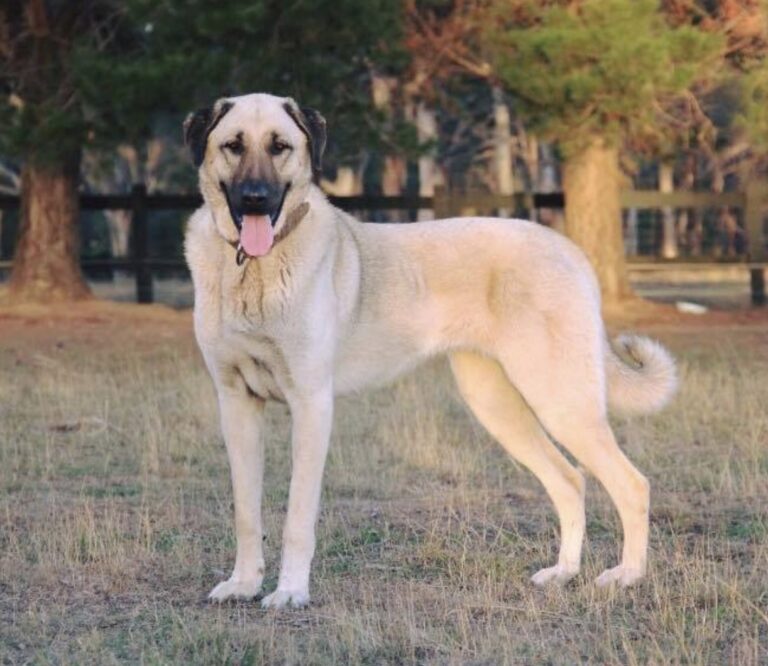
The Caucasian Shepherd Dog and the Kangal are often compared because both are large livestock guardian breeds developed for territorial protection and predator deterrence. Despite superficial similarities, the two breeds were shaped by different environments, working conditions, and functional priorities.
This page compares the Caucasian Shepherd Dog and the Kangal by examining differences in size, behavior, guarding style, and historical development.
The Caucasian Shepherd Dog and the Kangal are both livestock guardian breeds, but they differ in size, temperament, and guarding approach. The Caucasian Shepherd Dog emphasizes territorial defense and physical deterrence, while the Kangal is often associated with active livestock protection in open environments.
Geographic and Historical Background
The two breeds originated in distinct regions with different environmental pressures.
The Caucasian Shepherd Dog developed in the mountainous Caucasus region, where harsh climates and isolated settlements favored large size and strong territorial behavior.
The Kangal originated in Anatolia, where open landscapes and pastoral livestock systems influenced its development as a mobile livestock guardian.
Differences in Size and Physical Structure
Physical build is one of the most noticeable differences.
The Caucasian Shepherd Dog generally displays heavier body mass, thicker bone structure, and a more imposing frame.
The Kangal, while still large, is typically more athletic and lighter in build, reflecting its need to move efficiently across open terrain.
Coat and Environmental Adaptation
Coat characteristics reflect regional climates.
The Caucasian Shepherd Dog has a dense double coat designed for cold and variable mountain conditions.
The Kangal’s coat is usually shorter and lighter, supporting endurance in warmer and drier environments.
Temperament and Behavioral Differences
Behavioral traits differ based on working context.
The Caucasian Shepherd Dog tends to exhibit stronger territorial fixation and defensive behavior toward perceived intrusions.
The Kangal is often described as more outwardly mobile, focusing on active livestock protection rather than fixed territorial defense.
Guarding Style and Working Approach
Guarding strategies highlight functional differences.
The Caucasian Shepherd Dog relies heavily on presence, deterrence, and territorial control.
The Kangal typically combines presence with active movement around livestock, responding dynamically to threats across wider areas.
Independence and Human Interaction
Both breeds are independent, but their interaction patterns differ.
The Caucasian Shepherd Dog often operates with minimal human involvement once territory is established.
The Kangal may display slightly higher responsiveness to shepherds due to its working context.
Suitability in Different Environments
Environmental compatibility varies between the breeds.
The Caucasian Shepherd Dog aligns more closely with fixed territories and enclosed environments.
The Kangal is often better suited to expansive, open landscapes where mobility is required.
Summary of Key Differences
While both breeds share a guardian foundation, their differences reflect regional adaptation.
The Caucasian Shepherd Dog emphasizes territorial defense and physical deterrence, while the Kangal prioritizes active livestock protection across open terrain.
These differences are best understood when viewed within the full context of the breed’s size, temperament, and working purpose, which are outlined in the main Caucasian Shepherd Dog overview page.