
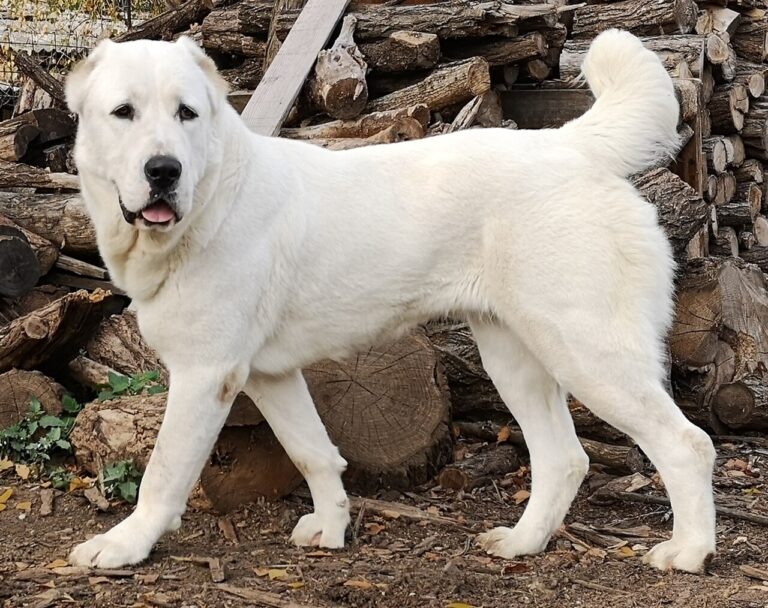
The Caucasian Shepherd Dog and the Alabai are frequently compared because both are large livestock guardian breeds developed to protect animals and territory in challenging environments. Although they share a similar functional category, the two breeds emerged from different regions and were shaped by distinct ecological and cultural pressures.
This page compares the Caucasian Shepherd Dog and the Alabai by examining their origins, physical traits, temperament, and working approaches.
The Caucasian Shepherd Dog and the Alabai are both livestock guardian breeds, but they differ in regional origin, guarding style, and behavioral expression. The Caucasian Shepherd Dog emphasizes territorial defense, while the Alabai reflects a more nomadic livestock protection background.
Geographic and Historical Background
The two breeds originated in different parts of Eurasia.
The Caucasian Shepherd Dog developed in the Caucasus region, where mountainous terrain, harsh climates, and fixed settlements favored strong territorial guarding behavior.
The Alabai, also known as the Central Asian Shepherd Dog, originated across Central Asia, where nomadic livestock management and wide-ranging herds influenced its development.
Differences in Size and Physical Structure
Both breeds are large and powerful, but their physical expression differs.
The Caucasian Shepherd Dog often displays heavier bone structure, denser coat, and a more imposing overall presence.
The Alabai is typically large and muscular but may appear more streamlined, reflecting the need to move across expansive grazing areas with livestock.
Coat and Climate Adaptation
Coat characteristics reflect environmental conditions.
The Caucasian Shepherd Dog has a dense double coat suited to cold and variable mountain climates.
The Alabai’s coat varies in length and density but is often adapted to a broader range of climates, from cold winters to hot summers.
Temperament and Behavioral Differences
Behavioral traits reflect different working contexts.
The Caucasian Shepherd Dog commonly exhibits strong territorial fixation and defensive behavior toward intrusions.
The Alabai is often characterized by confidence and independence with a broader tolerance for movement within and around livestock groups.
Guarding Style and Working Method
Working approaches highlight key differences.
The Caucasian Shepherd Dog typically guards defined territory, relying on presence and deterrence.
The Alabai historically guarded mobile herds, adapting its behavior to shifting environments and routes.
Independence and Human Interaction
Both breeds are highly independent.
The Caucasian Shepherd Dog often operates with minimal human direction once boundaries are established.
The Alabai may show flexibility in working alongside herders due to its nomadic background, though it remains largely autonomous.
Environmental Suitability
Suitability varies depending on setting.
The Caucasian Shepherd Dog aligns more closely with fixed properties, enclosed land, and defined territorial boundaries.
The Alabai is often better adapted to open landscapes where livestock movement is frequent and territory is less rigidly defined.
Summary of Key Differences
While both breeds share a guardian foundation, their differences reflect regional adaptation and working style.
The Caucasian Shepherd Dog emphasizes territorial defense and physical deterrence, while the Alabai reflects a more mobile, wide-ranging livestock guardian role.
Understanding how the Alabai compares to the Caucasian Shepherd Dog is easier when viewed within the broader context of the breed’s size, temperament, and working background, which are explained in the main Caucasian Shepherd Dog overview page.