
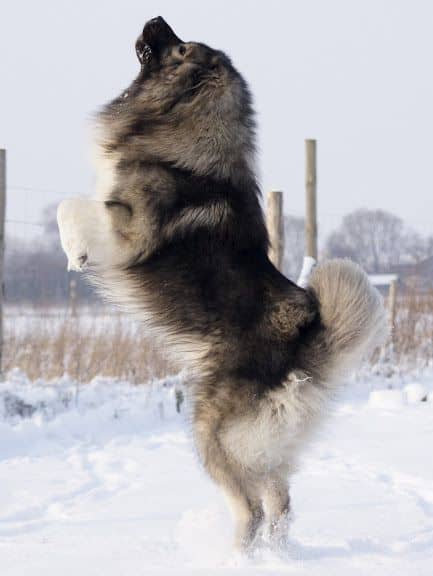
Training difficulty is one of the most misunderstood aspects of the Caucasian Shepherd Dog. The breed is often labeled as stubborn or untrainable, not because it lacks intelligence, but because its working role does not align with conventional obedience-based training models.
Understanding training difficulty requires shifting perspective from command compliance to environmental learning and responsibility-based behavior.
The Caucasian Shepherd Dog is considered difficult to train because it was developed for independent decision-making rather than obedience, repetition, or constant handler direction.
Independence and Decision-Making
Training difficulty often comes from the breed’s habit of evaluating situations before acting. The Caucasian Shepherd Dog does not ignore commands randomly; it assesses whether a response is necessary based on context, which reflects guardian logic rather than resistance to training.
Independence is the primary factor influencing training difficulty.
The breed was historically required to assess threats and act without waiting for instruction. This resulted in a dog that prioritizes situational judgment over immediate response to commands.
From a training perspective, this means compliance is conditional rather than automatic.
Low Reliance on Human Direction
Unlike handler-focused working breeds, the Caucasian Shepherd Dog does not depend on constant instruction to function. This low reliance on human cues explains why traditional obedience methods often feel ineffective despite the dog clearly understanding routines and boundaries.
Unlike obedience-oriented breeds, the Caucasian Shepherd Dog does not rely heavily on human cues.
Commands are evaluated rather than reflexively followed. If a command does not align with the dog’s assessment of the situation, it may be ignored without anxiety or confusion.
This behavior reflects autonomy, not defiance.
Difference Between Learning and Obedience
The breed learns environmental rules quickly but does not generalize them into repetitive command performance. Understanding where to be, when to intervene, and what to monitor comes more naturally than executing drills or tricks on request.
The breed is capable of learning but not of repetitive compliance.
It understands routines, boundaries, and expectations when they are consistent and relevant. However, repetitive drills and command-heavy training often produce diminishing results.
Learning occurs through context and consequence rather than repetition.
Training Focus: Structure Over Commands
Training outcomes improve when emphasis is placed on consistency rather than control. Predictable routines, clear spatial boundaries, and stable expectations reduce conflict more effectively than increasing command frequency or pressure.
Effective training emphasizes structure rather than control.
Clear boundaries, predictable routines, and consistent environmental rules shape behavior more reliably than verbal commands. The dog responds best when it understands responsibility rather than instruction.
This approach aligns with how the breed historically learned its role.
Motivation and Reinforcement Limitations
Food, praise, or play do not consistently override environmental priorities for this breed. Motivation is tied more closely to responsibility and territory, which limits the effectiveness of reward-based training when used without structural context.
Traditional motivators have limited impact.
Food rewards, praise, or play do not consistently override environmental assessment. The breed is motivated more by territory, stability, and responsibility than by reward-driven engagement.
Training strategies that ignore this often fail.
Maturity and Training Timeline
Training expectations should account for the breed’s slow mental and physical maturation. Behavioral consistency often increases with age as the dog settles into its role, making patience more effective than early performance pressure.
Training difficulty changes with age.
As the dog matures and fully assumes its guarding role, behavior becomes more consistent and predictable. Early training should focus on exposure and boundary recognition rather than performance.
Expecting early obedience often leads to frustration.
Common Training Misinterpretations
Lack of immediate response is often misread as failure.
In reality, the dog may be processing context before acting. Mislabeling this behavior as stubbornness leads to inappropriate training methods that increase resistance rather than clarity.
Understanding intent prevents conflict.
Modern Training Expectations Versus Breed Reality
Modern training culture favors responsiveness and engagement.
The Caucasian Shepherd Dog does not fit this model. Expecting companion-style obedience ignores the breed’s functional design and leads to unrealistic assessments of success.
Training should support coexistence, not performance.
Training difficulty becomes easier to interpret when the breed is viewed through its original purpose as a self-directed guardian rather than a handler-dependent dog. This perspective aligns with the broader characteristics of the Caucasian Shepherd Dog where structure and responsibility matter more than command response.