
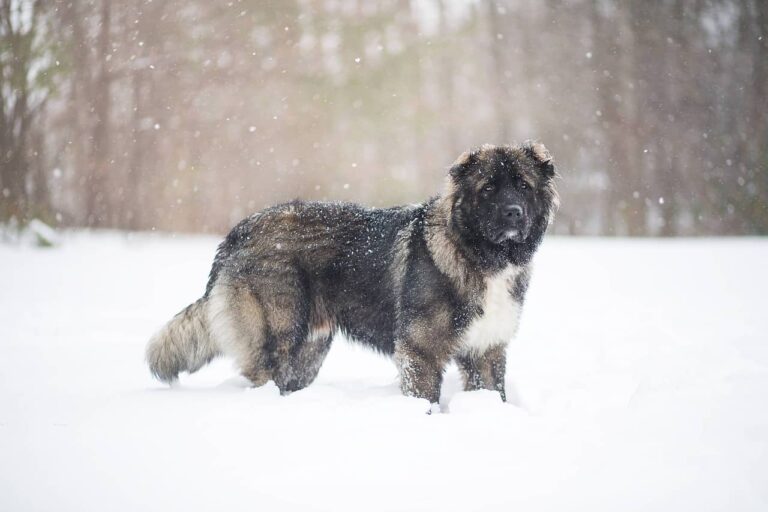
Climate adaptation is a core characteristic of the Caucasian Shepherd Dog, shaped by centuries of survival in the mountainous Caucasus region. The breed evolved under extreme weather conditions, requiring resilience to cold, wind, snow, and seasonal variability.
Understanding climate suitability means examining how the dog’s physical structure, coat, and behavior respond to environmental stress rather than assuming universal adaptability.
The Caucasian Shepherd Dog is highly adapted to cold and variable climates, while hot and humid environments require careful management due to its size and dense coat.
Cold Weather Tolerance
Cold tolerance is one of the breed’s strongest adaptations.
A dense double coat, thick skin, and substantial body mass allow the dog to withstand low temperatures and prolonged outdoor exposure. Snow, wind, and freezing conditions do not typically impair function when shelter and space are available.
Cold environments align naturally with the breed’s original working conditions.
Coat Function and Thermal Regulation
The coat plays a critical role in climate adaptation.
The outer coat repels moisture and debris, while the undercoat insulates against temperature extremes. This layered structure regulates body temperature more effectively than trimming or artificial insulation.
Interfering with coat function can reduce natural climate resilience.
Seasonal Adjustment
The breed adjusts naturally to seasonal changes.
Undercoat density increases in colder months and sheds during warmer periods. This seasonal cycle supports thermal regulation without external intervention.
Shedding is a sign of adaptation, not discomfort.
Heat Tolerance Limitations
Heat tolerance is more limited.
High temperatures, humidity, and prolonged heat exposure place strain on the breed due to body mass and coat density. Unlike desert-adapted or short-coated breeds, the Caucasian Shepherd Dog is not optimized for sustained heat.
Heat management becomes critical in warm climates.
Managing Warm and Hot Environments
In warm regions, environmental control is essential.
Shade, airflow, access to cool resting areas, and reduced activity during peak heat hours help mitigate thermal stress. Outdoor exposure should be structured around temperature rather than routine.
Adaptation requires management rather than expectation of natural tolerance.
Humidity and Thermal Stress
Humidity compounds heat stress.
Moist air reduces the effectiveness of natural cooling mechanisms. In humid climates, the breed may experience discomfort at lower temperatures than expected.
Dry heat is generally more manageable than humid conditions.
Indoor Versus Outdoor Climate Exposure
Living environment influences climate response.
Outdoor access in appropriate climates supports natural thermoregulation, while confined indoor spaces may disrupt normal temperature adjustment. Artificial heating and cooling should complement, not override, natural adaptation.
Environmental consistency supports stability.
Misinterpretation of Climate Suitability
Calm behavior does not always indicate comfort.
The breed may remain still in unfavorable conditions while conserving energy, masking early signs of thermal stress. Observing subtle changes in behavior is more reliable than relying on visible activity.
Climate suitability must be evaluated holistically.
Climate adaptation should be assessed based on the breed’s original environmental conditions and physical design rather than modern convenience. This perspective aligns with the broader characteristics of the Caucasian Shepherd Dog where environment, structure, and function are tightly connected.