
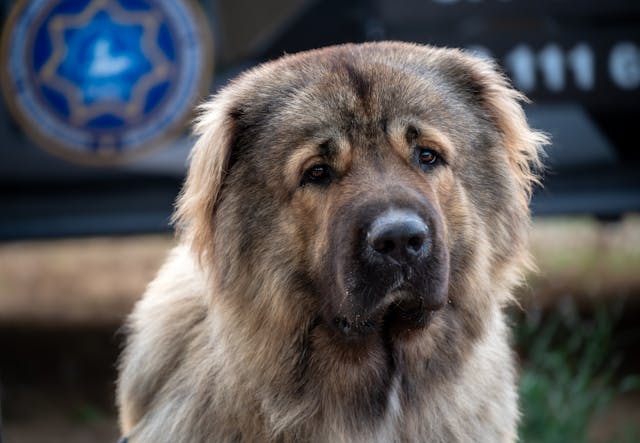
The origin and history of the Caucasian Shepherd Dog are deeply connected to the geographic, climatic, and cultural conditions of the Caucasus region. The breed did not emerge from modern kennel systems or selective companion breeding, but from centuries of functional use in livestock protection and territorial defense.
Understanding the breed’s history requires examining the environment in which it developed and the practical demands placed on dogs responsible for protecting animals and human settlements in isolated areas.
The Caucasian Shepherd Dog originated in the Caucasus region, where harsh climates, rugged terrain, and pastoral life shaped a powerful livestock guardian breed developed for independent territorial protection.
The Caucasus Region as the Breed’s Foundation
The Caucasus region lies between Eastern Europe and Western Asia and is defined by mountainous terrain, extreme weather variation, and remote human settlements. For centuries, communities relied heavily on livestock for survival, making protection against predators a critical necessity.
Dogs in this region were expected to live outdoors year-round, withstand cold temperatures, and operate far from human supervision. These environmental pressures formed the foundation of the Caucasian Shepherd Dog’s development.
Early Livestock Protection Roles
The primary historical role of the Caucasian Shepherd Dog was livestock guarding rather than herding. Unlike herding dogs that respond to human direction, guardian dogs remained with animals continuously, monitoring their surroundings and responding independently to threats.
Predators such as wolves and other large carnivores required dogs capable of deterrence through size, confidence, and physical presence. Over time, dogs displaying these traits were favored and bred within local populations.
Functional Selection Over Appearance
The breed developed through functional selection rather than standardized appearance. Dogs were evaluated based on their ability to protect livestock, endure harsh conditions, and remain reliable under pressure.
As a result, early Caucasian Shepherd Dogs varied in size, coat length, and coloration, reflecting regional conditions rather than aesthetic preference. Consistency existed in function rather than uniform physical traits.
Regional Variation Within the Caucasus
The Caucasus region encompasses diverse landscapes and cultures, leading to natural variation in local guardian dogs. Mountainous areas favored heavier coats and stronger builds, while lower regions produced slightly lighter variations adapted to different climates.
Despite these differences, the core behavioral traits — independence, territorial awareness, and protective instinct — remained consistent across regions.
Relationship With Human Communities
Caucasian Shepherd Dogs were not treated as companion animals in the modern sense. Their role was practical and essential, with trust built through reliability rather than obedience or affection.
Dogs often lived on the periphery of human settlements, protecting boundaries and livestock rather than integrating closely into daily household life. This relationship shaped the breed’s reserved and self-directed temperament.
Transition Into Modern Recognition
Formal recognition of the breed occurred much later than its functional development. As kennel clubs and breed registries emerged, attempts were made to define standards for a dog that had long existed outside structured breeding systems.
These standards attempted to capture common traits while acknowledging the breed’s natural variation and working origins.
Preservation of Working Traits
Despite modern recognition, many lines of Caucasian Shepherd Dogs continue to reflect their original purpose. Working ability, territorial instinct, and environmental resilience remain central characteristics.
Where breeding shifted toward appearance alone, differences in behavior and capability began to emerge, highlighting the importance of understanding the breed’s historical foundation.
Historical Context in Modern Understanding
Modern interpretations of the Caucasian Shepherd Dog often overlook its origin as a self-reliant guardian shaped by necessity rather than preference. Evaluating the breed without historical context can lead to misunderstanding of its behavior and needs.
A clear understanding of origin and history provides essential insight into why the breed behaves as it does today.
The historical development of the breed provides essential context for its size, temperament, and working behavior, which are explained in the main Caucasian Shepherd Dog overview pageent.