
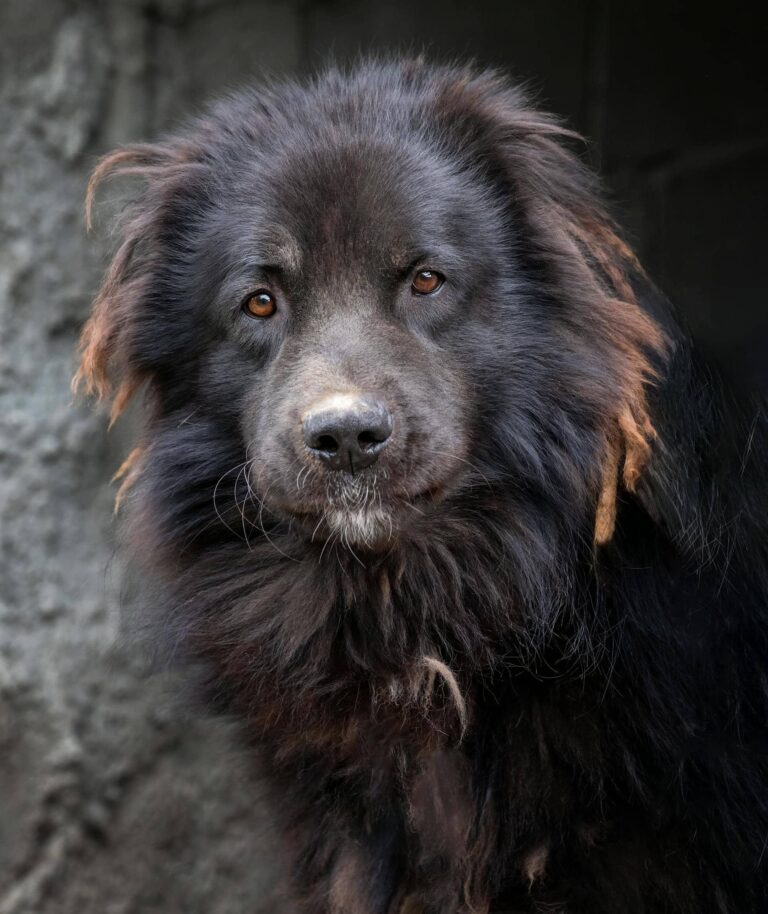
The relationship between the Caucasian Shepherd Dog and other pets is shaped primarily by the breed’s historical role as a livestock guardian. Rather than being bred for social play or cooperative pack behavior, the breed developed behaviors focused on protection, territorial awareness, and selective tolerance.
This page explains how the Caucasian Shepherd Dog typically interacts with other animals and how its instincts influence behavior in multi-pet environments.
The Caucasian Shepherd Dog’s interactions with other pets are influenced by guarding instincts, territorial behavior, and context rather than generalized sociability. Responses vary depending on familiarity, environment, and the type of animal involved.
General Social Orientation Toward Other Animals
The breed does not approach other animals with universal friendliness or aggression.
Behavior toward other pets is often neutral or reserved, shaped by whether the animal is perceived as part of the established environment or as an external presence.
Interaction With Other Dogs
Interactions with other dogs depend heavily on context and familiarity.
Interaction with other dogs is strongly influenced by familiarity rather than species alone. The Caucasian Shepherd Dog typically distinguishes between dogs that belong to its established environment and unfamiliar dogs entering perceived territory, responding defensively only when boundaries are unclear.
Familiar Dogs
Dogs that are consistently present within the same environment may be tolerated as part of the established territory.
Unfamiliar Dogs
Unfamiliar dogs entering perceived territory may trigger defensive or territorial responses rather than social engagement.
Interaction With Cats and Smaller Pets
Responses to smaller animals vary by exposure and environment.
Smaller pets are assessed based on movement patterns and context rather than prey drive alone. Animals that are part of the household and introduced gradually are more likely to be accepted, while fast or unfamiliar movement can trigger heightened monitoring behavior.
Household Animals
Animals raised within the same household may be accepted as part of the protected group rather than viewed as intruders.
External Small Animals
Smaller animals outside the established environment may be treated with caution or suspicion rather than play-driven behavior.
Relationship With Livestock
The breed’s historical relationship with livestock differs from typical pet interactions.
Livestock are typically categorized as protected rather than social companions. The Caucasian Shepherd Dog maintains distance while monitoring animals collectively, which explains why guarding behavior appears calm and non-interactive rather than playful or herding-oriented.
Protective Orientation
Livestock are often treated as entities to be guarded rather than social companions.
Territorial Integration
Animals that are part of the working environment are incorporated into the dog’s sense of responsibility.
Influence of Environment on Multi-Pet Dynamics
Environment plays a central role in determining interactions.
Multi-pet compatibility is heavily affected by space and boundary clarity. Confined environments increase the likelihood of tension due to compressed responsibility zones, while open settings allow the dog to distribute attention more evenly across animals.
In open or rural settings, the breed may distribute attention across a broader territory, while confined environments can intensify focus on immediate surroundings and cohabiting animals.
Consistency and Routine in Multi-Animal Settings
Predictability influences tolerance.
Established routines and consistent animal presence tend to reduce uncertainty and reactive behavior over time.
Long-Term Compatibility Considerations
Compatibility with other pets is best evaluated as an ongoing dynamic rather than a fixed trait.
Changes in environment, household composition, or territorial boundaries can alter how the breed responds to other animals.
Interactions with other pets are best understood within the broader context of the breed’s temperament, size, and working background, which are explained in the main Caucasian Shepherd Dog overview page.