
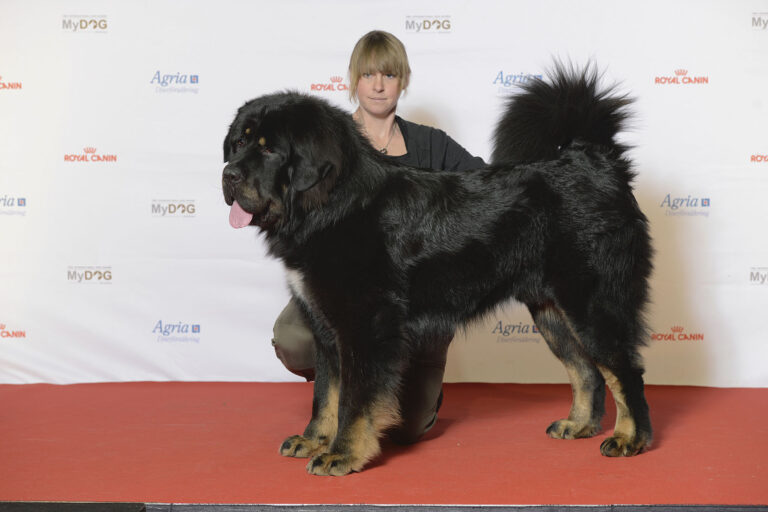
The Caucasian Shepherd Dog and the Tibetan Mastiff are often compared due to their imposing size, guarding reputation, and ancient working histories. Both breeds developed in harsh mountainous regions, yet their roles, environmental pressures, and behavioral expressions evolved in different cultural contexts.
This page compares the Caucasian Shepherd Dog and the Tibetan Mastiff by examining their origins, physical traits, temperament, and guarding approaches.
The Caucasian Shepherd Dog and the Tibetan Mastiff are both large guardian breeds, but they differ in working context and behavioral emphasis. The Caucasian Shepherd Dog is strongly territorial and property-focused, while the Tibetan Mastiff developed as a guardian of settlements and caravans in high-altitude regions.
Geographic and Cultural Origins
The breeds originate from different parts of Asia with distinct cultural histories.
The Caucasian Shepherd Dog developed in the Caucasus region, where isolated villages and livestock required continuous territorial protection.
The Tibetan Mastiff originated in the Himalayan regions of Tibet and surrounding areas, where it guarded monasteries, villages, and trade routes rather than free-ranging livestock alone.
Differences in Size and Physical Structure
Both breeds are large and powerful, but their physical expression differs.
The Caucasian Shepherd Dog typically exhibits heavier bone structure, greater body mass, and a more rugged build suited to direct territorial deterrence.
The Tibetan Mastiff is large and imposing but often appears more balanced and compact, reflecting its role as a stationary guardian of fixed locations.
Coat and Climate Adaptation
Coat development reflects environmental adaptation.
The Caucasian Shepherd Dog has a dense double coat designed for cold, wet, and variable mountain climates.
The Tibetan Mastiff also has a thick coat, often with a pronounced mane, adapted to high-altitude cold and dry conditions.
Temperament and Behavioral Expression
Temperamental differences reflect working context.
The Caucasian Shepherd Dog commonly displays strong territorial fixation and readiness to confront perceived intrusions.
The Tibetan Mastiff is often described as reserved and aloof, with a tendency to guard specific structures or boundaries rather than actively patrol wide areas.
Guarding Style and Role
Guarding approaches highlight functional differences.
The Caucasian Shepherd Dog emphasizes active territorial defense and deterrence across defined land areas.
The Tibetan Mastiff traditionally guarded entrances, compounds, and settlements, often operating as a stationary sentinel rather than a roaming guardian.
Independence and Human Interaction
Both breeds are independent by nature.
The Caucasian Shepherd Dog frequently operates with minimal human oversight once territory is established.
The Tibetan Mastiff may exhibit selective responsiveness to familiar humans while remaining reserved toward outsiders.
Environmental Suitability
Environmental compatibility varies between the breeds.
The Caucasian Shepherd Dog aligns more closely with properties requiring continuous territorial coverage.
The Tibetan Mastiff is often associated with fixed-site guarding roles in quieter, less dynamic environments.
Summary of Key Differences
Although both breeds share ancient guardian roots, their differences reflect regional adaptation.
The Caucasian Shepherd Dog prioritizes territorial control and deterrence, while the Tibetan Mastiff reflects a more stationary guarding tradition tied to settlements and structures.
Connection to the Caucasian Shepherd Dog Overview
These breed differences are best understood when viewed within the full context of the Caucasian Shepherd Dog’s size, temperament, and working history, which are explained in the main Caucasian Shepherd Dog overview page.